A short field guide to the eras.
From the Pre-Postcard era of the 1840s through the Photochrome Era that began in 1939, a quick tour of the periods every postcard collector eventually learns to spot at a glance.
A short field guide to the eras every postcard collector eventually learns to spot at a glance. The illustrations below are real cards — most from the club's own teaching collection — chosen to capture each era's signature.
Pre-Postcard Era
Postal regulations kept postcards from existing. Their direct ancestors were printed envelopes — comic, Valentine, and musical — produced by D. William Mulready, E. R. W. Hume, Dickey Doyle, and James Valentine. Patriotic Covers appeared in great numbers during the U.S. Civil War (1861 – 1865). The first U.S. postal-type card was a privately printed card copyrighted in 1861 by J. P. Carlton; that copyright later transferred to H. L. Lipman and the cards were sold as 'Lipman Postal Cards' until 1873.
Pioneer Era
Dr. Emanuel Herrmann suggested the first postal card in 1869; Hungary adopted it that year. The first regularly printed card appeared in 1870 — a historical card from the Franco-German War. The first advertising card appeared in Great Britain in 1872; the first German card in 1874. The 1893 Columbian Exposition cards in Chicago are generally considered the first U.S. cards printed expressly as souvenirs.
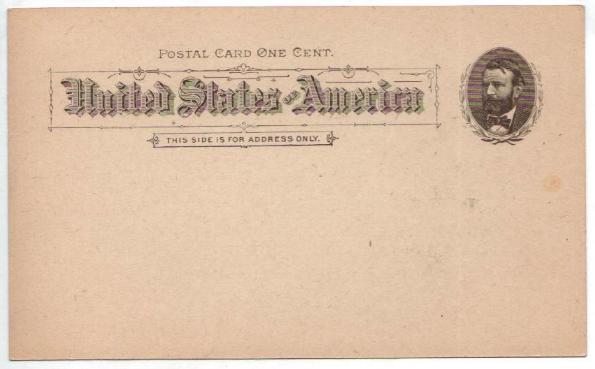
Private Mailing Card Era
American publishers were allowed to print and sell cards bearing the inscription 'Private Mailing Card, Authorized by Act of Congress on May 19, 1898.' These could be posted with one-cent stamps — the same rate as government postals — and unleashed the private postcard. Writing was still restricted to the picture side.
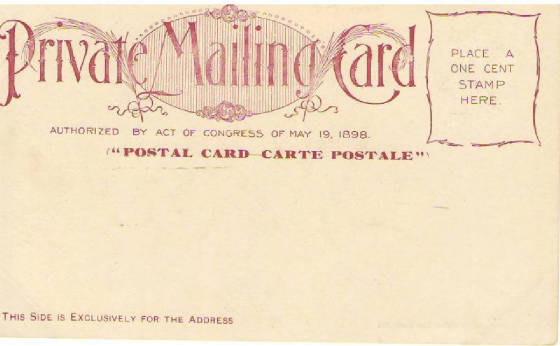
Undivided Back Era
The U.S. Government allowed the words 'Post Card' to be printed on the undivided back of privately printed cards, dropping the previous authorization inscription. Writing was still limited to the front. Other countries began to permit divided backs: England in 1902, France in 1904, Germany in 1905, and the United States — finally — in 1907.
Divided Back · The Golden Age
Divided backs became near-universal. Most U.S. cards in this period were printed in Germany, then regarded as the master printers of the world. Rising tariffs and the approach of war ended that import line — and with it, the Golden Age. Millions of cards were sent and saved during these years; this is the era that gave us the bulk of the surviving early American postcard record.
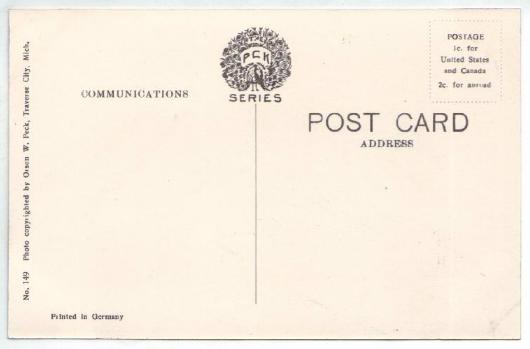
White Border Era
American printers caught up. Quality was uneven; the market was saturated; greeting cards declined. View cards remained strong. The white borders — originally a way to save ink — became the visual signature of the era.
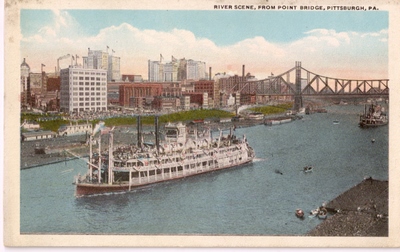
Linen Card Era
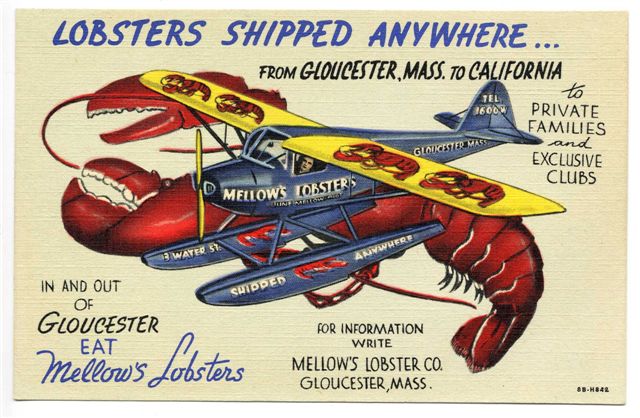
Cards printed on a linen-textured stock with vivid, almost lurid color, produced by Curt Teich and contemporaries. View cards and comics dominated. French-fold greetings displaced the older greeting-card format. The political-humor linens of this era are among the most collected today.
Chrome / Photochrome Era
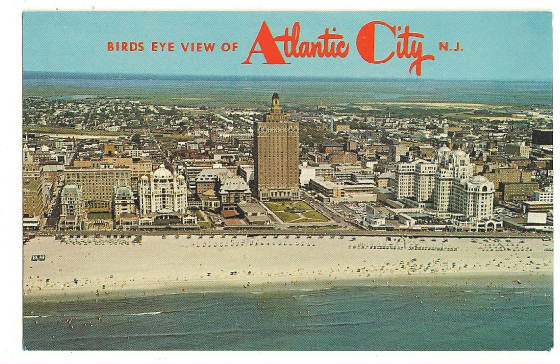
The Union Oils series of 1939 were the first chromes. Made of very small printed dots with a glossy finish, chromes are the postcards most of us grew up with — and the ones still produced today.
Want to date a card you have? The glossary covers most of the terms above, and the resources page links out to the Real Photo Postcard Stamp Box reference for dating RPPCs.